Project C3

Predicting therapy resistance in human cancers

2022 – 2025 Predicting therapy response and relapse of aggressive B cell lymphomas

Kasia Bozek, U Cologne | web | email

Reinhard Büttner, U Cologne | web | email

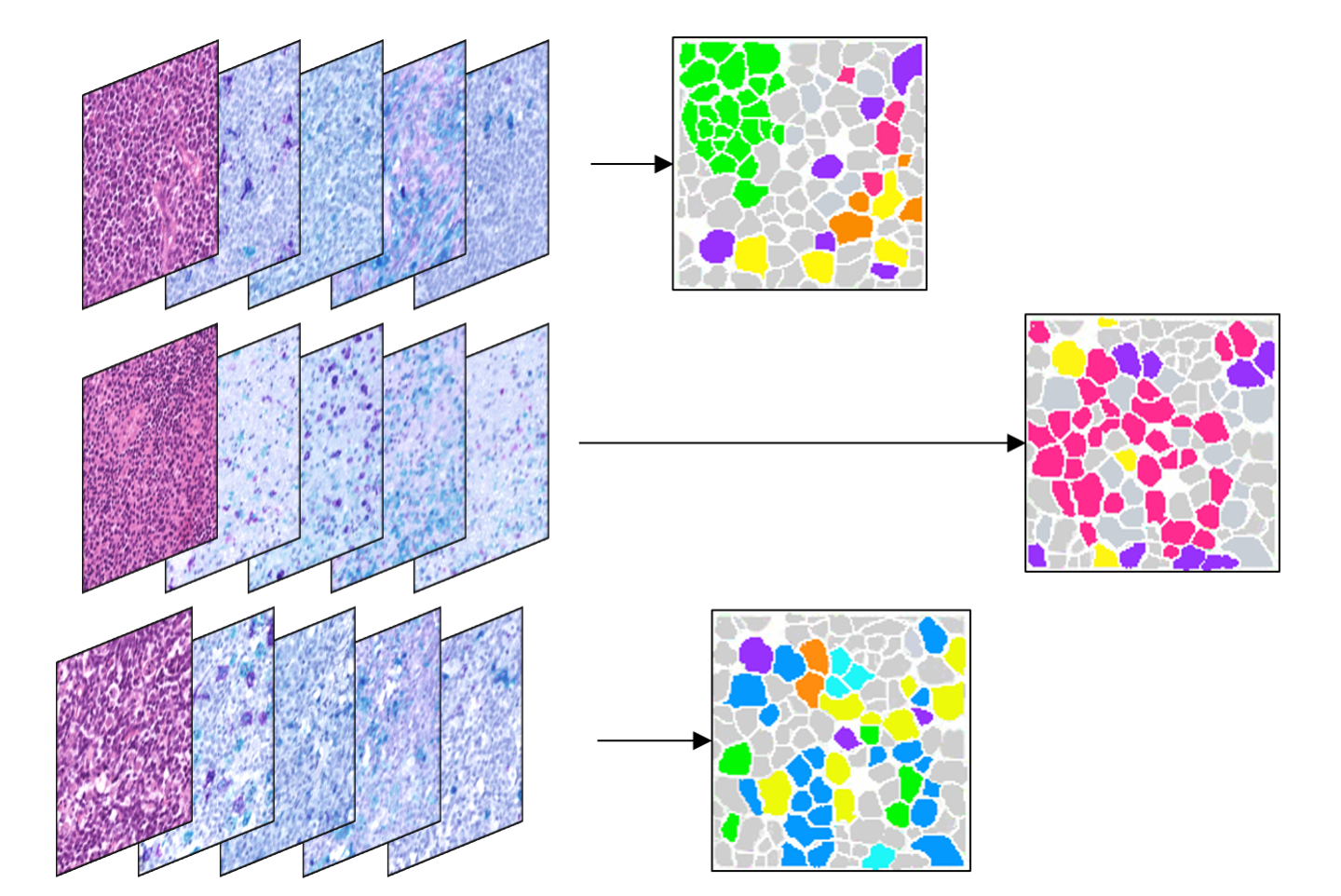
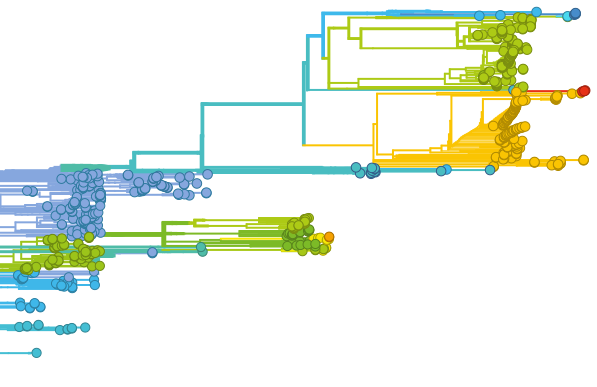
Cancer treatments often fail because tumors evolve resistance, which is a major cause of cancer-related deaths. Previous research has identified several common patterns by which cancers become resistant, including changes in cell identity, suppression of immune responses in the tumor environment, metabolic shifts driven by NRF2 signaling, and genomic instability that activates cancer-promoting genes. These findings suggest that tumors may follow a limited number of predictable evolutionary paths toward resistance. In this project, we will analyze tumor samples from lymphoma, colorectal, and lung cancer patients using digital pathology images as well as DNA and RNA sequencing data. By applying advanced artificial intelligence to combine these data types, we aim to identify early markers that predict whether and how resistance will develop, ultimately helping doctors choose more effective, personalized treatments.

Publications

Deep learning-based interpretable prediction of recurrence of diffuse large B-cell lymphoma

Naji, H., Hahn, P., Pisula, J. I., Ugliano, S., Simon, A., Büttner, R., & Bozek, K, BJC Reports, 3(1), 20. May 2025, 10.1038/s44276-025-00147-0

HoLy-Net: Segmentation of histological images of diffuse large B-cell lymphoma

Naji, H., Sancere, L., Simon, A., Büttner, R., Eich, M.-L., Lohneis, P., & Bozek, K, Computers in Biology and Medicine, 170, 11. Jan 2024, 10.1016/j.compbiomed.2024.107978

Detection of COPB2 as a KRAS synthetic lethal partner through integration of functional genomics screens

Christodoulou E.G., Yang H., Lademann F., Pilarsky C., Beyer A., Schroeder M., Oncotarget 8:34283-34297, 10. March 2017, 10.18632/oncotarget.16079